Lights, camera, architecture!
Welcome to our cinematic journey through the enchanting world of Philadelphia’s old movie theaters, where the grandeur of architectural design takes its star turn alongside the magic of cinema. Picture yourself stepping into these historical gems, where every arch, every embellishment, and every curve tells a tale as captivating as any silver screen epic.
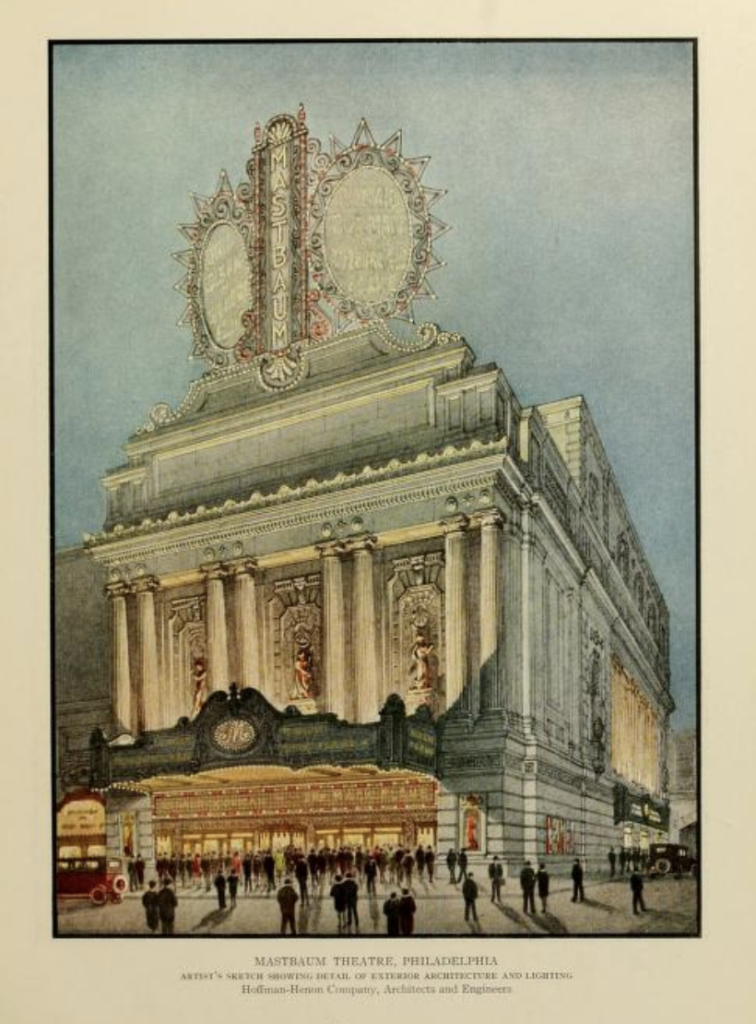
Source: Motion Picture News, Oct – Dec 1928
As you walk through the ornate lobbies and auditoriums, it’s impossible not to feel a sense of awe at the craftsmanship and attention to detail that went into creating these masterpieces of design. From the opulent movie palaces, with their towering facades and lavish interiors adorned with gold leaf and velvet, to the sleek Art Deco wonders of the 1930s, where geometric patterns and streamlined forms evoke the glamour of Hollywood’s golden age, each theater is a testament to the creativity and vision of its architects.
It’s not just the aesthetics that make these theaters so special – it’s also the stories they hold within their walls. From the grand opening nights that drew crowds of eager moviegoers, to the memorable screenings of classic films that have become the stuff of legend, these theaters have been witness to countless moments of cinematic history. And though the films may have changed over the years, the magic of sitting in a darkened theater, surrounded by the beauty of its architecture, remains as powerful as ever.
But what is it that made the theaters of the past so architecturally magical? How did architects of the past blend functionality with grandeur to create spaces that still inspire awe today?
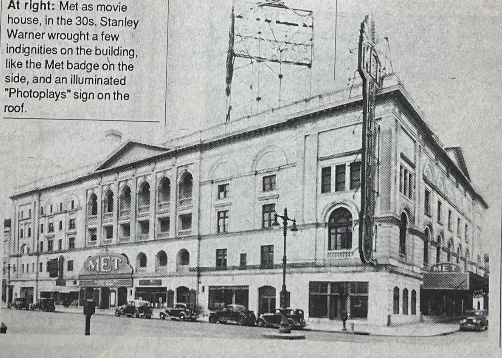
Source: Philadelphia City Paper, Nov 15- Dec 6, 1985
Before embarking on an architectural exploration, let’s rewind the reel into the captivating backstory of movie theaters in Philadelphia, akin to uncovering the origin story before the grand cinematic spectacle unfolds.
Philadelphia’s cinematic journey traces back to the late 19th century when the city first witnessed the marvel of moving pictures. In the late 1800s, a Philadelphia inventor gave one of the first demonstrations of a projected moving picture — a precursor to cinema and movies and the video that is now ubiquitous in our world (Wolfman-Arent). Initially, theaters were makeshift venues, ranging from converted storefronts to vaudeville stages, where early motion pictures were showcased as part of a variety show. However, as the popularity of cinema soared, dedicated movie theaters began to emerge across the city.
The early 20th century marked a significant period of growth for Philadelphia’s movie theater scene. The advent of silent films brought about the construction of purpose-built cinemas, equipped with state-of-the-art projection technology. These theaters catered to a burgeoning audience eager to experience the latest cinematic sensations.
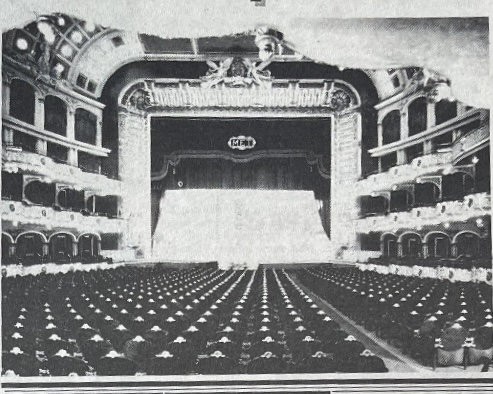
From the introduction of sound in films to the advent of Technicolor and widescreen formats, each innovation transformed the way audiences experienced movies. Notable milestones include the opening of landmark theaters such as the Boyd Theatre in 1928, renowned for its exquisite Art Deco design, and the Ritz Theatre in 1927, which played a significant role in introducing independent and foreign films to Philadelphia audiences. These theaters not only showcased the latest cinematic offerings but also served as cultural hubs where communities gathered to share in the magic of the silver screen.
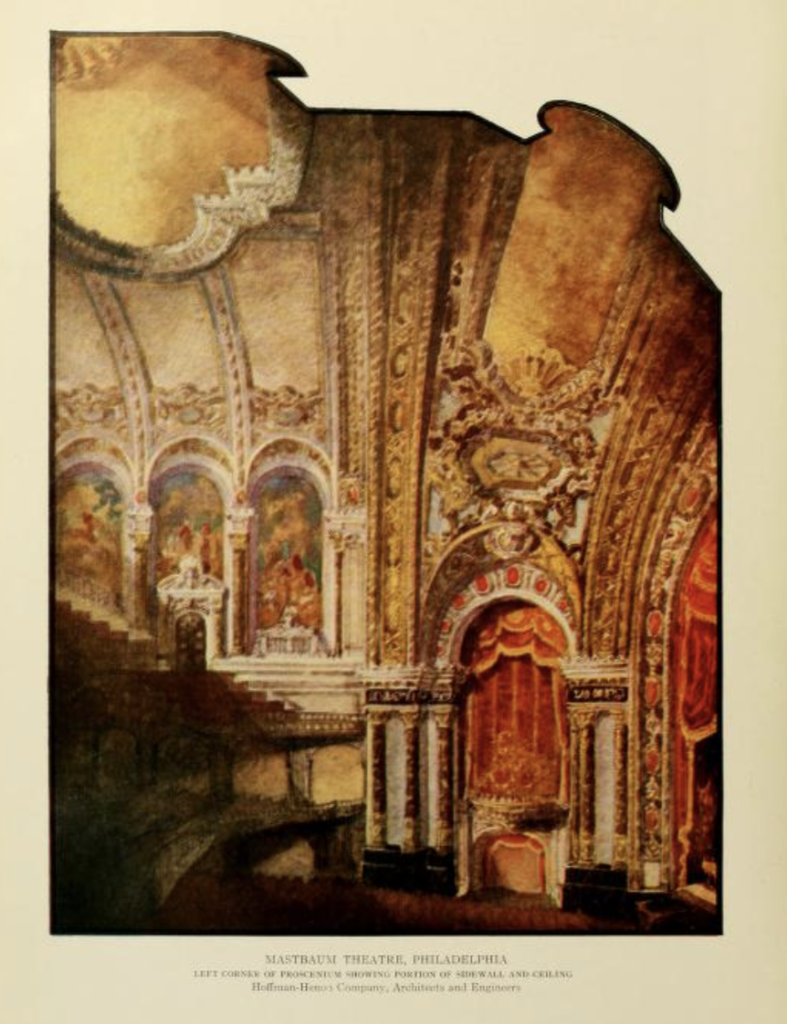
Source: Motion Picture News, Oct – Dec 1928
The evolution of movie theater architecture in Philadelphia was deeply intertwined with societal and cultural shifts. As the city experienced periods of prosperity and urban renewal, theaters reflected the prevailing architectural trends of their time. From the grandeur of Beaux-Arts-style theaters in the early 20th century to the sleek sophistication of Art Deco designs in the 1920s and 1930s, each era left its mark on Philadelphia’s cinematic landscape.
Moreover, changes in audience demographics and viewing habits also influenced theater architecture. The rise of suburbanization in the mid-20th century led to the construction of sprawling multiplex cinemas, catering to suburban audiences seeking convenience and comfort. Despite these changes, however, the allure of Philadelphia’s historic movie palaces endures, serving as a testament to the cinema’s golden age.
As we continue our journey through Philadelphia’s rich architectural tapestry, it’s time to shine a spotlight on the captivating Art Deco and Streamline Moderne styles that graced the city’s theaters. These architectural marvels, reminiscent of the opulence and glamour of Hollywood’s golden era, added a touch of cinematic enchantment to Philadelphia.
Art Deco and Streamline Moderne emerged as bold, avant-garde movements that celebrated the antique style. With their sleek lines, geometric patterns, and luxurious materials, these styles captured an era defined by innovation and optimism. In the book “A comprehensive, Descriptive Record of 813 Theaters Constructed since 1724”, Irvin R. Glazer, describes the Broad Street Theater as follows:
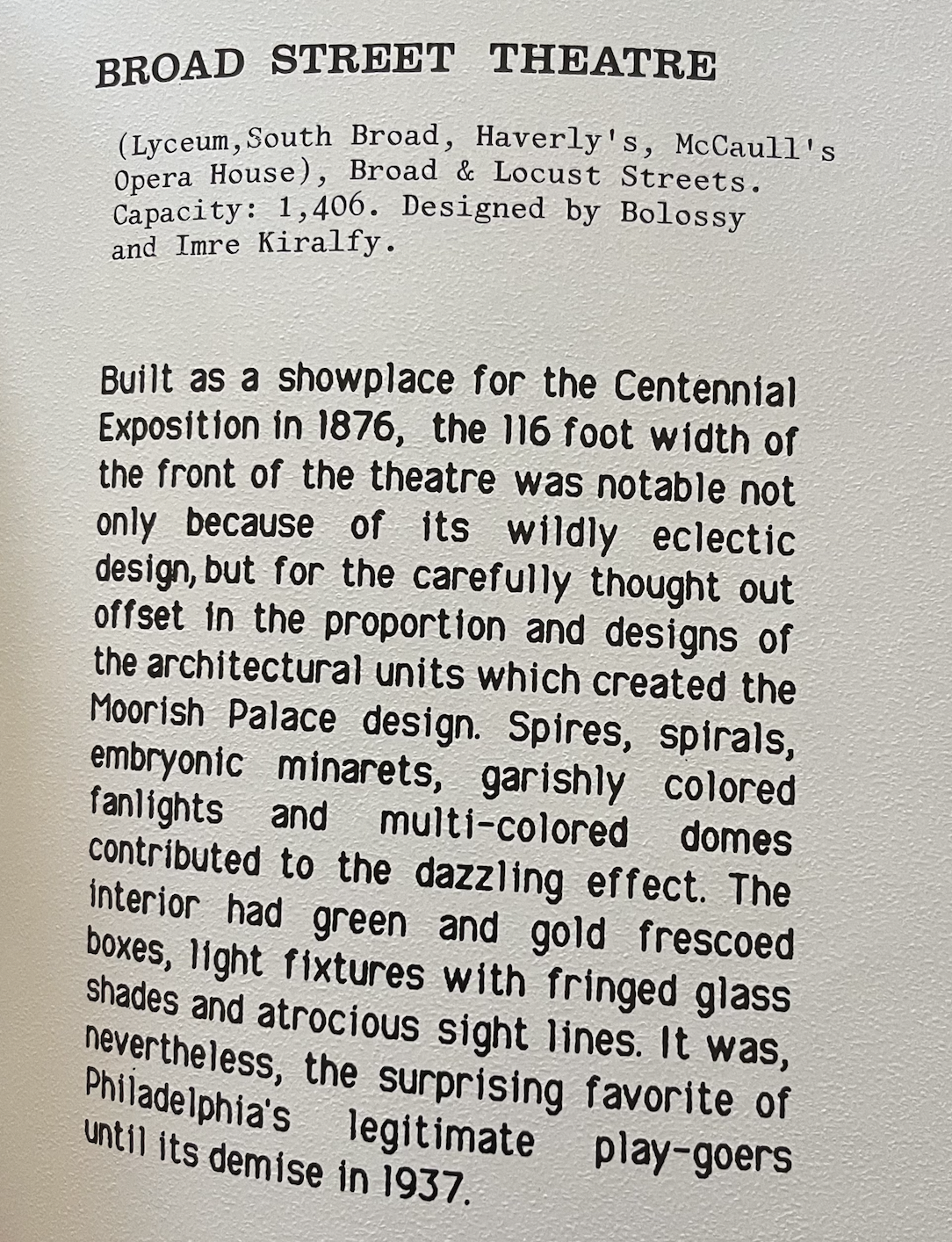
“Spires, spirals, embryonic minarets, garishly colored fanlights, and multi colored domes contributed to the dazzling effect. The interior had green and gold frescoed boxes, light fixtures with fringed glass shades and atrocious sight lines” (13).
Source: Philadelphia Theaters A-Z by Irvin R. Glazer
Source: Philadelphia City Paper, Nov 15- Dec 6, 1985
The architectural features described in the depiction of the Broad Street Theater were emblematic of a broader trend found in theaters throughout Philadelphia. Similar to the Broad Street Theater, many venues across the city boasted elements of Art Deco and Streamline Moderne styles. Ornate spires, intricate spirals, and vibrant domes adorned the exteriors of these theaters, captivating onlookers with their extravagant facades. Inside, patrons were greeted by opulent interiors featuring luxurious frescoes, elaborate lighting fixtures, and meticulous detailing. While each theater possessed its own unique charm, the overarching influence of Art Deco and Streamline Moderne design was evident, weaving a common thread throughout Philadelphia’s architectural landscape of theaters. Stepping into these theaters, patrons are enveloped in a world of timeless elegance and sophistication, as they encounter sumptuous interiors adorned with meticulously crafted Art Deco motifs, Streamline Moderne designs, and luxurious materials such as resplendent gilt and sumptuous velvet. Geometric patterns, sleek lines, and innovative architectural features further enrich the sensory experience, creating a captivating ambiance that transports visitors to a bygone era of cinematic splendor.

Source: Philadelphia City Paper, Nov 15- Dec 6, 1985
This journey would be incomplete without a proper consideration of theaters as community spaces. Cinema may be experienced alone, but rarely is it ever. Theaters of all eras understood this dynamic when designing additional spaces within theaters where communities could thrive and congregate.
A notable example of this is the Erlanger Theater (pictured below).The theater boasted a distinctive area dubbed the “Spanish Lounge,” originally designated for smoking patrons. However, it evolved into a hub where guests gathered between, before, and after shows. These smoking lounges possess a unique community-oriented layout, fostering connections among individuals drawn together by their shared desire to smoke. In this way, they not only facilitate social interaction but also cultivate a sense of belonging, ultimately encouraging more frequent visits to the movies.

Source: Motion Picture News, Oct – Dec 1928
Moreover another example which serves to be slightly more subtle is the Earle Theater in Philadelphia (pictured below). The Earle theater had unique designs embedded between its halls which allowed people to take rests together alongside the building’s rails. While it may have been intended to be a space where patrons could take a rest, it allowed the guests to treat it as a space where they could connect with one-another while at the theater.

Source: Motion Picture News, Oct – Dec 1928
It becomes evident that these architectural choices extended beyond mere aesthetics. They had a pivotal role in shaping the entire moviegoing experience, transforming theaters into more than just spaces for enjoying films. Instead, they become vibrant hubs where patrons can forge connections and find community beyond the confines of the silver screen.
As we traverse through the progression of movie theater architecture, we move from the magnificence of yesteryears to the contemporary styles of today.
The world of cinema architecture is constantly evolving, with modern trends reflecting the changing needs and preferences of today’s moviegoers. From the rise of multiplex cinemas offering a wide array of viewing options to the emergence of boutique theaters focusing on luxury and exclusivity, there’s no shortage of innovation in the industry. Sustainable design practices, immersive technologies, and adaptive reuse projects are also shaping the future of cinema architecture, paving the way for a more sustainable and inclusive cinematic experience.
In comparing historical theaters to their modern counterparts, one can’t help but notice a shift in architectural sensibilities. While the grand movie palaces of old exuded opulence and glamour, today’s theaters often prioritize functionality and technological innovation. Gone are the ornate frescoes and intricate detailing, replaced by minimalist aesthetics and cutting-edge amenities. However, despite these differences, both historical and contemporary theaters share a common goal: to provide audiences with an immersive and unforgettable cinematic experience.
While the architectural landscape of movie theaters may have evolved over time, the impact of design elements on the moviegoing experience remains as significant as ever. From the layout of seating arrangements to the acoustics of the auditorium, every architectural decision plays a crucial role in shaping the way audiences engage with films. Moreover, architectural features such as lighting, decor, and spatial design can enhance immersion, creating an unforgettable cinematic journey for movie enthusiasts.
Our exploration of Philadelphia’s old movie theaters has been a journey through time and space. From the opulent movie palaces of the past to the sleek and innovative designs of contemporary theaters, each venue tells a story of creativity, ingenuity, and cultural significance. In the end, whether we find ourselves stepping into a historic movie palace or a cutting-edge multiplex, one thing remains constant: architecture has been and will continue to be one of the most important part of the cinematic experience. In closing, let us stand in awe of the architectural wonders that have adorned Philadelphia’s cinematic landscape, for they are not just structures of brick and mortar, but monuments to the enduring magic of the silver screen.
References
Boyd Theatre. Cinema Treasures. (n.d.-a). https://cinematreasures.org/theaters/1209
Glazer, I. R. (1986). Philadelphia Theatres, A-Z: A comprehensive, Descriptive record of 813 theaters constructed since 1724. Greenwood Press.
History. Ritz Theatre Co. (n.d.). https://ritztheatreco.org/history/
[New York, N.Y. : Quigley Pub. Co.]. (1970, January 1). Motion picture herald (Aug-Oct 1947) : Quigley Publishing Co. https://archive.org/details/motionpictureher1681unse/page/n99/mode/2up?view=theater
Wolfman-Arent, A. (2023, November 19). The 1870 “Original movie” shown in Philadelphia, precursor to Modern Cinema. Billy Penn at WHYY. https://billypenn.com/2023/11/19/inventor-henry-heyl-and-phillys-role-in-early-moving-picture-technology/
