By Adeoluwa Adeoye and Tyler Wilson
The Early Years

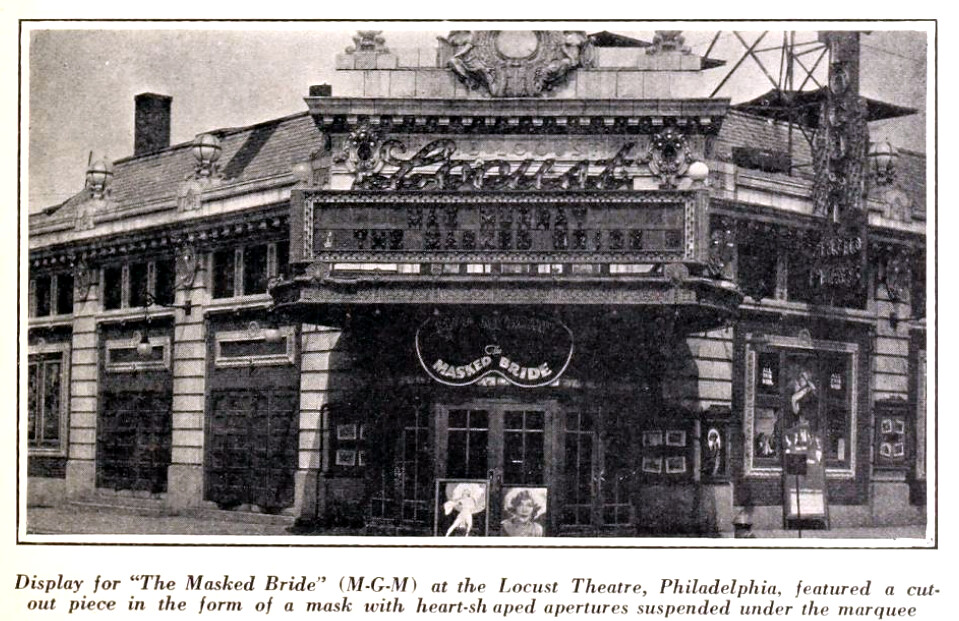
Nestled at the bustling intersection of Broad Street and Locust Street, the Locust Theater in Philadelphia once stood as a beacon of cultural entertainment. From its glamorous inception to its controversial demolition, the theater’s 55-year history reflects profound shifts in American social dynamics, economic challenges, and cultural conflicts.
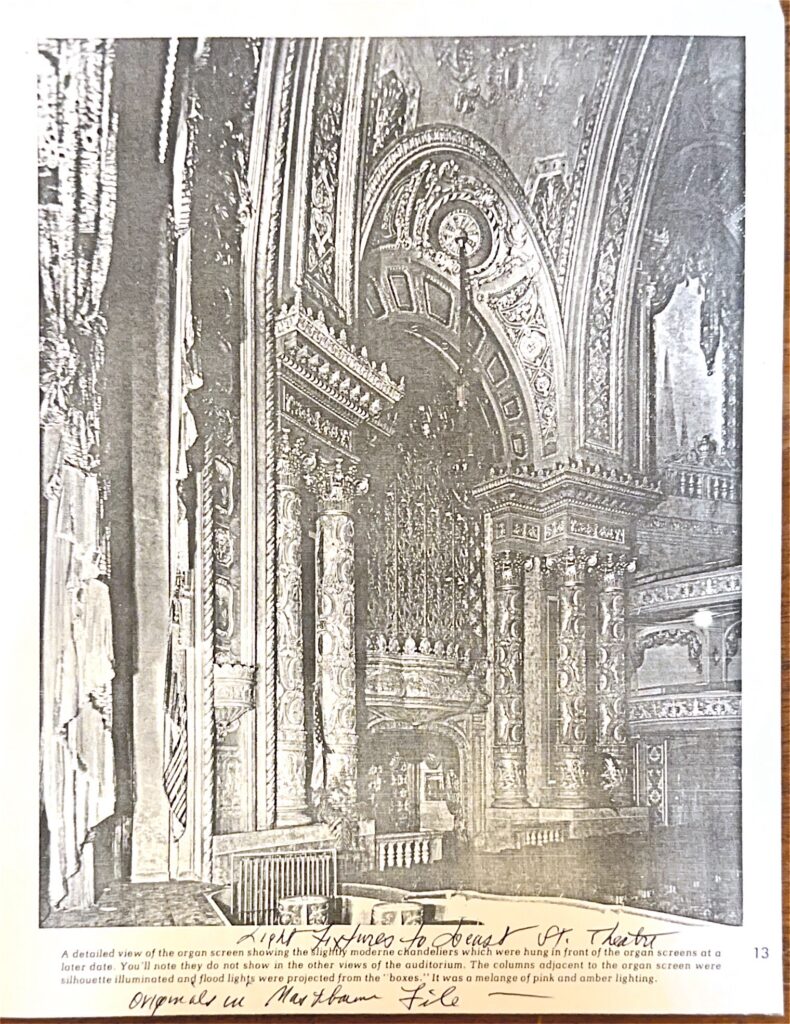
When the Fox-Locust Theater opened its doors in 1927, it was the epitome of luxury and elegance. Located within the Equitable Building, the theater under the proprietorship of the Stanley Co. was rumored for management following a series of highly anticipated renovations. Amidst innovations in technology and commercial conduct, not to mention a $100,000 annual lease, the Stanley Co. felt insecure in its ability to successfully maintain another theater (Stanley Rents New Theatre). To the public’s chagrin, Fox Theaters Inc. was up to the task. Under the guidance of William Fox, the soon-to-be abandoned venue was licensed under Fox Film Inc. to screen exclusive Fox pictures. On March 20, 1927, the Fox-Locust Theater was ceremoniously welcomed to Philadelphia by Mayor Freeland Kendrick and William Fox to a screening of What Price Glory. The theater was magnificent. Its Gothic-style interiors, adorned in gold, red, ivory, and robin’s egg blue, displayed a grandeur that drew audiences from all over. The theater boasted a seating capacity of 1,580, with 1,052 seats on the main floor close to the orchestra, enhancing the acoustic experience for the audience (Fox-Locust, Newest of Legit Houses, Attracting Big Business). Still, beneath the surface glamour, the theater was ensnared in a web of economic difficulties, exacerbated by increasingly restrictive regulations and inflating overhead costs. Worst of all, the insurmountable architectural limitations would eventually render the Locust Theater unsuitable for larger, more popular productions that were crucial for profitability.
When the year 1930 rolled around, the Fox-Locust Theater was belly-up. Despite the initial anticipation, the theater struggled to find a successful business model and sell tickets. This can be attributed to several factors. Most notably, an oversaturation of downtown theaters overshadowed the Fox-Locust’s potential. Between the most popular downtown theaters, 12,000 seats needed to be filled weekly simply for the businesses to break even. Even the most inexpensive theaters required thousands weekly in profits (Addition of 12,000 Seats Will Create Critical Condition Downtown). A second detriment to the Fox-Locust was its inability to meet the public’s expectations. The theater was already infamous for its shallow 24-foot stage, but that was forgettable. The lack of air-conditioning severely limited the theater’s appeal and operability. It could not even safely open in the summertime. Whether this was a result of neglect or fiscal inability, the company’s indecision to stretch its budget cost them greatly when hot weather and boredom were rampant (Fox-Locust to Close for Summer). At the end of 1929, the Fox-Locust Theater went dark, but was repurchased in 1930, and rebranded as a strictly “legitimate playhouse” dubbed the Locust Street Theatre (LOCUST STREET THEATRE). For a time the plays were popular, with the Locust–and other local theaters–acting as a “tryout” venue for Broadway musicals. Paul Robeson and Ethel Barrymore, great-aunt to Drew Barrymore, have notably blessed the stage of the Locust (Hine). Still, the Locust and Philadelphia’s reputations successively waned, which caused the rebranded theater to struggle with sales and accommodations like its predecessors.


Ticket from the New Locust Street Theater, March 30, 1977, from the Irvin R. Glazer Theater Collection, Athenaeum of Philadelphia
Midlife Crisis
In 1958, the theater underwent another transformation. After nearly 20 years of struggle, the theater was purchased by William Goldman Interests and subsequently rebranded as The New Locust Street Theater. The management changed, but the theater maintained its specialization in stage productions. It continued to house off-Broadway productions and showcase renowned entertainers like Judith Anderson and Paul Newman, but The New Locust Theater could not escape the problems of its past.
Over the remainder of its tenancy, Goldman’s New Locust Theater would suffer from greater cultural shifts that would eventually render it antiquated and irrelevant.
For about the next two decades, the theater found itself grappling with sporadic closures, limited productions, and financial viability. The New Locust found itself on its last legs by 1978, when the Bellevue Hotel turned its interest towards commandeering the New Locust’s space within the Equitable Building. At this time, theater’s role in contemporary culture was becoming increasingly questionable. On a political and commercial front, the economic ventures of interest shifted from entertainment to tourism and urban development. Theaters like the New Locust were demonstrably run-down, increasingly unprofitable, and viewed as outdated or undeveloped urban spaces (Actors in Philly Protest Local Theater Razing). Moreso, the relative abundance of unpopular theaters and incompatible tax policies urged many officials, developers, and even Irvin R. Glazer, president of the Theatre Historical Society, to support the Bellevue Hotel development in the belief that the New Locust’s existence was an economic disservice to the city (Re: ‘The Locust Is About to Make Its Exit,’ Thomas Hine). Contrarily, Jay Simpson, who worked at the Midtown Ticket Office nearby described the theater as a huge money-maker because “It lured people to the block, the kind of people who would buy tickets to shows there and elsewhere in town” (Rally calls for saving Locust). Regardless, the New Locust would stand in conflict with the dynamic priorities of the city; its relevance was ironically questioned by politicians and big businessmen like the ones responsible for its existence.

The Inevitable Betrayal
Despite the opposition, economic forces did not act alone to deride the contemporary importance of The New Locust Theater. The public, too, turned its back on the New Locust. Although theater was fading from the minds of Philadelphians, Moe Septee, a local producer, pulled out all the stops in trying to uplift the New Locust in the ‘70s. In its late years, Septee kept the venue profitable by leasing theater space to Black-oriented productions and untested pre-Broadway productions, like the 1979 play Richard III, starring Al Pacino (Locust Theater, Philly’s 4th Legiter, Faces Demolition). This adds a racial component that potentially signifies a tacit disregard for the New Locust Theater more nuanced than ostensible claims of unpopularity or unprofitability. It’s possible the New Locust’s theatergoing demographic did not align with the segment that executives were trying to reach, nor the base they aspired to mold. Over time, the New Locust Theater may have been viewed as “too Black,” so its opponents dialectically countered this social development to nefariously preserve the downtown’s white image, attract particular developers, and bolster touristic pursuits.

Audience at the new Locust Street Theater, March 26, 1967, from Temple University Libraries, Special Collections Research Center
Race Relations
Ironically, this recoil from Blackness implicated the entire city of Philadelphia. Officials and moguls found themselves in opposition to resuscitating theater spaces on grounds of economic or cultural irrelevance. However, the entertainment economy’s irrelevance in Philadelphia waned due to its own ignorance and bigotry. Philadelphia was formerly renowned as a tryout town for Broadway but found itself replaced by Washington D.C. due to its ubiquitously discriminatory crowds (Collins). Essentially, the city buried its own reputation in Broadway’s graveyard, then, years later hypocritically rejected the industry. Worse still, the New Locust Theater finally reconciles the city’s negligence towards Black audiences, but its opponents could not be more vocal.
While the cultural divestment may not be wholly attributable to poor race relations, it stands to reason local theaters could have remained more economically viable and culturally significant had a greater totality of the population been unabashedly considered and welcomed into their spaces. Furthermore, local institutions could have invested in and protected the culture before publicly opposing even the smallest of theaters.
The Unfortunate Death
The early 1980s marked the peak of the conflict over the New Locust Theater’s fate. The theater was officially sold to the Bellevue Hotel for $22 million. Advocates still argued for its preservation; they contended that with thoughtful investment and tenancy by the non-headquartered Drama Guild, the Locust could be revitalized to serve contemporary needs and maintain Philadelpia’s cultural vitality (Locust Theater, Philly’s 4th Legiter, Faces Demolition). In subsequent years, William Strutt, along with the Actors’ Equity Association staged protests against its demolition. The protests were minorly successful, with the involvement of various local actors, neighborhood folks, and journalists who empathized with the New Locust’s cause bringing valuable attention (Collins). Unfortunately, the attempts were futile.
In 1982, The New Locust Theater was demolished to construct a parking garage for the Bellevue Stratford Hotel, which would later be renamed the Fairmount Hotel.

Irvin R. Glazer Theater Collection, Athenaeum of Philadelphia
Afterlife
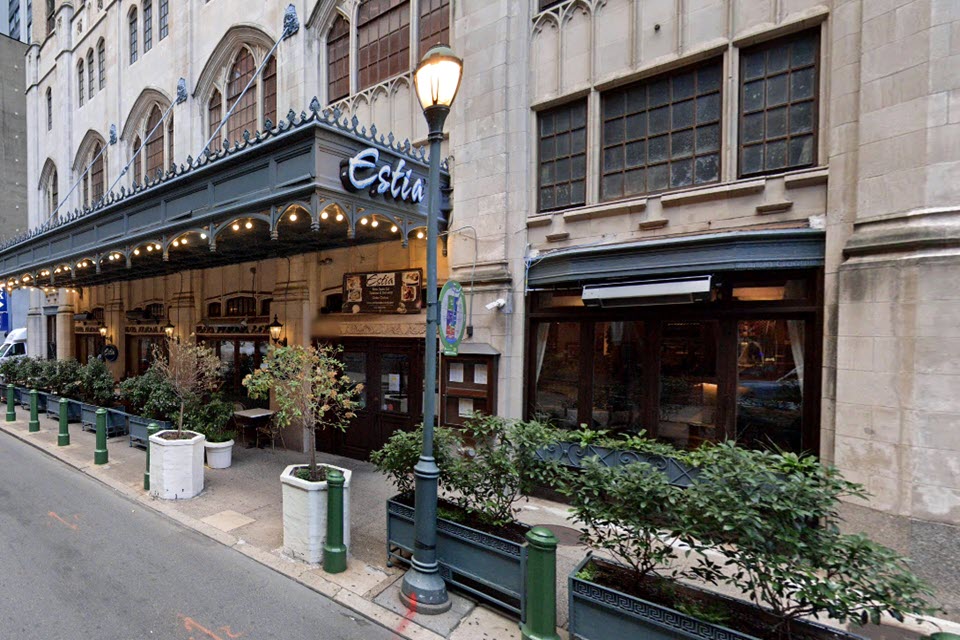
In 1985, the remaining interior of the theater’s restaurant became the DiLullo Centro restaurant, named after its owner, Chef Joseph DiLullo. One of their opulent chandeliers was installed in the remodeled building on Broad Street, while some of the other furnishings were transported to the main floor lobbies of the Rittenhouse Square Plaza. All of the other furnishings were sold off (Locust Street Theater).
Reflection
The story of the Locust Theater is a cautionary tale about the complexities of preserving cultural landmarks. In retrospect, the Locust itself had a myriad of problems. For one, “it was too small and poorly located” in comparison to other legitimate playhouses. It lacked air conditioning, it was deteriorating, it required millions to renovate, and most indicating, it was terminally untenable (Letters to the editor: Locust Theater). While blame can be placed on its systemic lack of support or the ubiquitous cultural indifference, its biggest flaw was its indefensible claim of necessity. The Locust arguably brought a touch of Hollywood and Broadway to local Philadelphians, but it remained at the intersection of political, commercial, and cultural interests, consistently unable to autonomously or self-assuredly establish itself over any one domain.
Still, the Locust’s contentious history highlights the need to value and protect these spaces to allow future generations to interrogate their pasts and make their own evaluations. The Locust Theater’s narrative—rich with joy, history, and activism—offers insightful lessons on the intersections of urban development, economics, race, and culture, which can inform contemporary ideas of change, struggle, and resistance. As Philadelphia and other cities continue to evolve, the memory of the Locust Theater urges us to consider what we value and choose to preserve in our communal landscapes, reminding us of the delicate balance between development and heritage.
In retrospect, the Locust Theater’s narrative—rich with themes of change, struggle, and resistance—offers insightful lessons on the intersections of race, economics, and culture in urban development. As Philadelphia and other cities continue to evolve, the memory of the Locust Theater urges us to consider what we value and choose to preserve in our communal landscapes, reminding us of the delicate balance between development and heritage.


Sources:
“Actors in Philly Protest Local Theater Razing.” The Philadelphia Inquirer, 17 June 1980.
“Addition of 12,000 Seats Will Create Critical Condition Downtown.” 1929.
Collins, William. “Theater.” The Philadelphia Inquirer, 2 Jan. 1983.
Estia. Accessed March 2024
“Fox-Locust to Close for Summer.” The Exhibitor, 1 July 1928.
“Fox-Locust, Newest of Legit Houses, Attracting Big Business.” 1 Apr. 1927.
“Fox-Locust: Locust Street at Broad; ‘Fazil’.” Accessed April 2024
Glazer, Irvin R. “Re: ‘The Locust Is About to Make Its Exit,’ Thomas Hine.” Received by
The Editor, 20 May 1982, Philadelphia, PA.
Glazer, Irving R. “Letters to the Editor: Locust Theater.” Philadelphia Inquirer.
Haas, Howard B. “Locust Street Theatre.” Cinema Treasures, cinematreasures.org/theaters/22730. Accessed 28 Apr. 2024.
“LOCUST STREET THEATRE.” 1980, Accessed 2024.
“The Lowly Finale of the Locust.” The Philadelphia Inquirer, 24 June 1982.
McCaffery, Tom. “Audience at the New Locust Street Theater.” Urban Archives,
Accessed 2024.
Nichols, Rick. “Rally Calls for Saving Locust.” The Philadelphia Inquirer, 21 Apr. 1982.
“Stanley Rents New Theatre at $100,000 a Year.” The Exhibitor, 13 Mar. 1925.
Ticket for Ladies At The Alamo. Accessed 2024.
Toto. Accessed April 2024
