by Sophie Huang and Zaccariah Wright, Fall 2021
CIMS Professor & Philadelphia Long-Term Resident
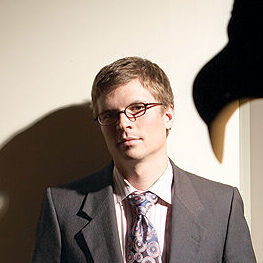
As a cinema academic and former film programmer who has lived in Philadelphia for over 10 years, Professor Will Schmenner has a connection to moviegoing in this city that most people will never have.
Before he became a professor at Penn, Prof. Schmenner was a film and video curator in Chicago, a film programmer for 10 years, and the founder of the Museum Cinema program at Northwestern University [1:03-1:24]. While an undergrad at the University of Chicago, Prof. Schmenner mentions that he became involved with “the longest continuously-run student film group in the nation,” Doc Films. This group had a 500-seat cinema and showed 8 movies a week with 13 screenings, which were all student-programmed [11:52-12:28]. He says this group helped him discover his love for film programming [12:29-12:32].
After moving to Philadelphia from Chicago, he discusses how his moviegoing and film watching habits changed drastically. All throughout college, Prof. Schmenner was able to watch “a movie a day, basically, on the big screen,” which he described as being like “heaven” [12:33-12:50]. After college, he began his career at Northwestern University, where he ran a smaller cinema of about 160 seats which showed 3 movies a week [13:03-13:15]. He says, “When I moved to Philly, it was the first time I didn’t have my own cinema,” which made him “kind of sad” [13:16-13:24]. Most importantly, he says that there wasn’t a functioning movie theater in Center City when he first arrived in 2009, so he struggled to find somewhere to watch movies [13:46-14:09]. He says, “I was really disappointed, to be honest. There [were] not as many cinemas as I [was] used to” [14:31-14:39].
But he also believes that moviegoing in Philadelphia “has gotten better since then” thanks to the help of people like Jesse Pires of Lightbox Cinema and Maori Karmael Holmes of BlackStar Film Festival [16:08-16:15]. In fact, he even states that Philadelphia’s contemporary relationship to film can best be characterized by these two organizations, and that “there’s a huge audience in Philadelphia for programming that’s directed towards Black film and Black cinema” [8:04-10:08]. In recent pandemic times, Prof. Schmenner has been watching movies online from the BlackStar Film Festival and attended the reopening of Lightbox Cinema [16:28-16:40].
Non-CIMS Professor & Philadelphia Short-Term Resident

Matthew Schelsinger is a fifth year PhD candidate in Comparative Literature and is teaching a semester course called Cinema and Revolution. Originally from Wisconsin, he’s been in Philadelphia for four years, one of which spent abroad in Paris.
He recalls a story from his research year in France. An inspiring anecdote in which people banded together to save the last cooperative cinema in Paris, named The Key. The owners were going to sell it but people rallied to prevent the theater from closing. Moviegoers had camped out in the theater and used a squatters law to hinder any plans to sell the property. Throughout this protest, the theater kept running. They played political films for those uniting to save their favorite cinema and sold beer to keep the occupation going. I believe this ties a perfect bow on what we’ve spoken about in class so far. We’ve spoken about reasons to go to the movies, the appeal of the darkened room, and the morality of talking in the theaters. In this case, people were so attached to this cinema-where most protestors probably had their fondest memories- that they “chained” themselves to it.
His first moviegoing experience in Philadelphia was at the Ritz 5, a small theater in Old City. While Prof Schlesinger doesn’t remember what he saw, he admitted to preferring this theater over others in Philly. “It’s a great little cinema down by the water” [2:09-2:12]
Recently, he went and saw the thriller, Lamb, in theaters, also at the Ritz 5. He declares that it was an amazing feeling to be back watching movies on the big screen, a sentiment shared with most people on this web page. It was also empty, he recalls there only being seven people seeing the movie that day, but I would attribute that to the nature of the film he was seeing.
However, he also went to see Teetan at another theater in Old City. In this theater, there was more of a crowd and he had a “we’re back” moment. Apparently, while watching the movie, the audience would laugh at scenes that didn’t seem all that funny. He doesn’t attribute this to the film, but rather to people’s feelings about being back in movie seats watching the silver screen. We’ve had countless discussions about the appeal of the movie theater. The design of the black box and seeing the dimly lit faces of other excited moviegoers. Prof. Schlesinger reveals that experiences like these are the reason he’s at Penn teaching a one-semester cinema course. People were “ready to laugh together” [3:56-3:58]
CIMS Student & Philadelphia Non-Native
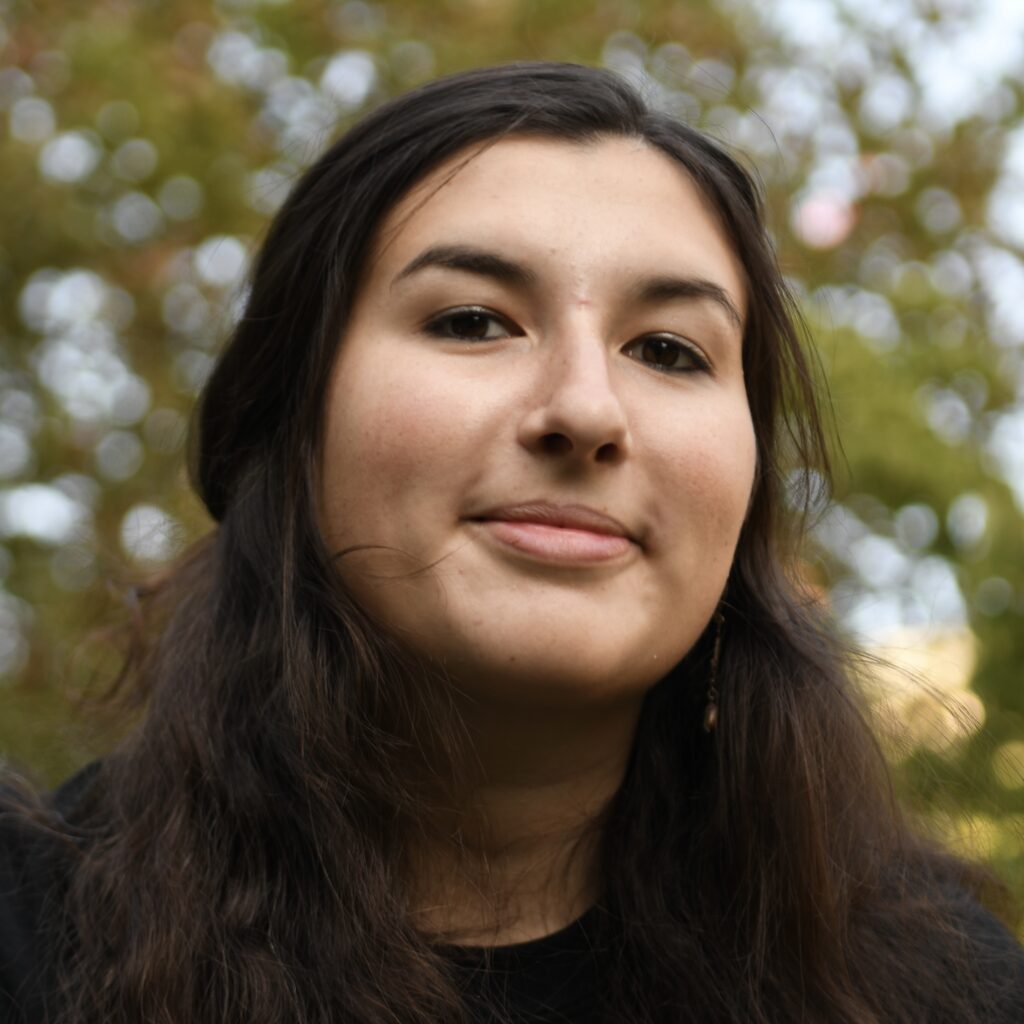
Penn senior and CIMS major Sage Levine characterizes most of her moviegoing and movie watching experiences in relation to Penn’s campus. She also, either consciously or subconsciously, articulates many theories about moviegoing very clearly in her anecdotes, which may be due in part to her being at the end of her formal education in CIMS.
She remembers one of her first movie watching experiences in Philadelphia to be a horror movie viewing of It Follows in the Quad during her freshman year. In her re-telling, she describes it as a “communal” experience, as well as “low stakes” [0:33-0:38]. She is also quick to share what position her body was in while watching (“cradling up in fear”), where exactly she was (“friend’s dorm room,” “sitting on his bed”), with whom she watched, and whether there were external factors involved (“there were snacks,” “people were coming in and out of the room”) [0:22-0:43].
Like many other movie goers, the COVID-19 pandemic restricted when she could return to a physical theater. She remembers one of her most recent experiences took place in a dorm, but then adds that she was able to watch In the Heights this past summer at the theater on the corner of 40th and Walnut, which was also her first time at this theater [0:51-1:05]. She describes moviegoing at the theater to be “definitely a whole different experience,” “louder,” and “in your face” [1:13-1:17].
What was most intriguing to me is that she also describes the theater as having a special ability to make her more emotional, and that she “immediately want[s] to start crying every time [she] watches a movie” in a theater [1:18-1:27]. She follows this by speculating that this effect has to do with the “dark room,” being “fully focused on the screen,” no “outside distractions” [1:25-1:40]. Even though she doesn’t explicitly name the Black Box theory of cinemas, she essentially describes it in relation to her own experiences. As an academic, she is aware of cinema dispositif and the spatial-social effects of being in a physical theater, but she still enjoys and remembers the more casual, every day elements of her moviegoing experiences.
Both of Sage’s recollections align with Annette Kuhn’s definition of “Type C” memories of cinemagoing, in which subjects can typically remember the location of the picture house (Sage’s most recent experience), companions (Sage’s first experiences), and decor and seating (Sage’s first experiences). She also exemplifies Kuhn’s idea of “repetitive memory discourse” in Type C memories when she talks about wanting to “start crying every time [she] watches a movie,” the inclusion of “every time” indicating a habitual event caused by cinemagoing.
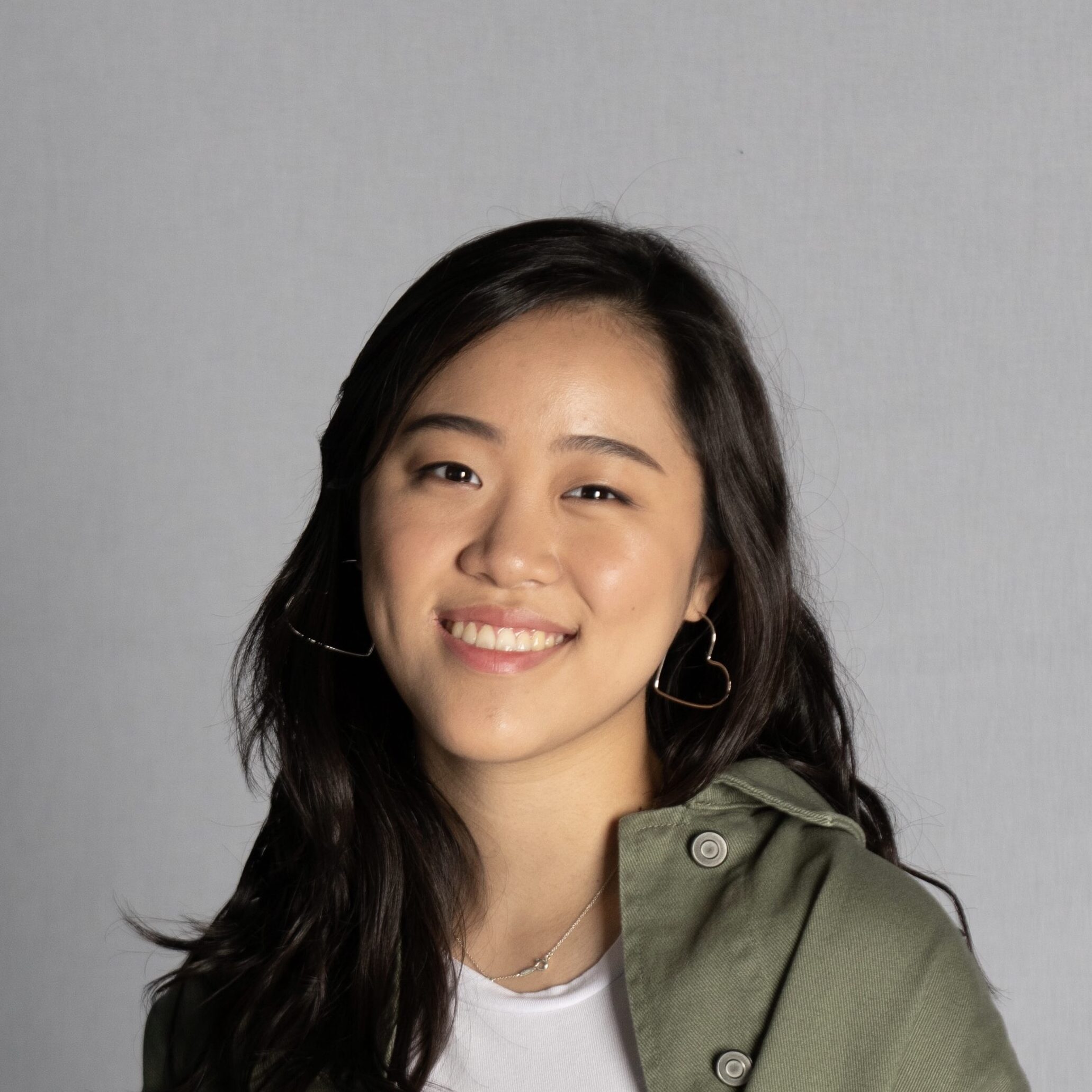
Penn sophomore and CIMS minor Christine Lee’s moviegoing experiences in Philly have largely been defined by her new-ness to the city in conjunction with the COVID-19 pandemic. Like Sage, she is also able to articulate her experiences using language in a way that aligns with formal cinema theories. Unlike Sage, she is minoring in CIMS rather majoring in it (she is majoring in History), and she is only in her second year of education.
When asked about her first moviegoing experience here, Chris brings up her recent memory of going to the local campus movie theater for the first time for a “group movie night” to watch Shang-Chi [0:12-0:18]. Although she can’t immediately remember the name of the theater, she is able to immediately recognize it as Cinemark when prompted [0:20-0:30]. When asked whether they had food, she asks, “Am I allowed to say we snuck in popcorn?” acknowledging her guilt at having “broken the rules” of the movie theater, while following the question with an explanation that she and her friends “snuck in popcorn in [a friend’s] sweater,” perhaps acknowledging a collective acceptance of the ingenuity of sneaking food into movie theaters [0:50-0:58]. Of the crowd, Chris “remember[s] there being more people than [she] expected” but that “it was nice to see people back in the theater” [1:08-1:25].
She then directly address moviegoing in more theoretical terms and says, “Obviously, just the moviegoing experience itself, part of it is having other people watch it in the same space as you. So, it’s like a private–it’s an intimate experience in that everyone’s quiet and you’re watching it in a dark room, you’re completely focused. But it’s also a shared experience, because everyone in that theater is watching the same thing at the same time as you” [1:26-1:48].
Here, Chris demonstrates an awareness of “space” and space-making practices, as well as the duality of collective cinemagoing a simultaneously a “private” or “intimate experience” in addition to being a “shared experience.” Like Sage, she also speaks verbatim about cinemagoing in relation to the Black Box theory (“dark room,” “focused”). Like Sage, Chris has an awareness of cinema dispositif and understands cinemagoing from both lived and academic perspectives.
CIMS Student & Philadelphia Native

Max Master is in this Film Exhibition and Moviegoing class and has been present for our conversations regarding the experience that comes with going to the movies. He answers my questions with what he’s learned in class. Mester’s earliest memory of going to the movies was when he was 3 years old. He watched the animated kids film Shark Tale with Will Smith. He doesn’t remember much, as he was only three.
However, his most recent movie was viewing Tenet back in March 2020. He went to an AMC and remembered sinking into the reclining seats and staring up at the big screen. However, concessions were prohibited due to the pandemic. At this point in the pandemic, taking your mask off was out of the question. He also recalls the film being “loud” [0:43-0:44]. Being back in theaters was a feeling Max missed. He went from seeing two to three movies a night over quarantine to being back in a big theater. This was something all of our interviewees touched on. There is something, “magical and enchanting about watching a movie screen that huge.” [2:12-2:15] Then there’s watching it with someone and being with strangers that add to the experience.
When asked if theaters are becoming obsolete, he readily disagreed. As long as there is something to put on the screen, there will be a screen. DVDs and Netflix have come and challenged the cinema’s predominance in film culture. Once people step back in to theaters and remember the immersive, almost hypnotic, feeling of being in the black box, all doubts regarding the necessity of movie theaters go out the window.
Non-CIMS Student and Philadelphia Non-Native

Kristian Correa is a Penn senior in the Nursing program who grew up in Lansdale, PA, a town 40 minutes north of Philadelphia. He was quite taken aback when I asked him to take part in this project and cited his lack of filmic knowledge as a reason he shouldn’t be included. However, in talking about his moviegoing experiences, he brushes on many of the themes and moviegoing phenomena we have spoken about at length in classroom discussion.
He recalls seeing his first movie in Philadelphia at the AMC on Broad street when he was a freshman. He was visiting his girlfriend at the time on Temple’s campus – they went to go see The Nun when it came out in theaters. In one anecdote he tells, after our recording, a fellow moviegoer sitting nearby got so scared that she flung popcorn onto his ex-girlfriend’s lap.
Like Christine, his most recent theater experience is seeing Marvel Studios’ Shang-Chi when it came out at the beginning of this month. He goes on to name a few aspects of the moviegoing experience that he enjoys, including, “going with friends” and “getting concessions” [1:08-1:10]
“You can always watch TV, at home, but the huge screen definitely makes a difference.” [1:11-1:15] Kristian believes that in the wake of the streaming era, the importance of brick-and-mortar theaters has been greatly undermined. However, these relics of the past will always have a purpose. “The experience of going to the movies will always be there” [1:54-1:56]
He even mentions the contract dispute between Scarlet Johannessen and the Walt Disney Co. over Marvel’s Black Widow. He is, of course, referring to the $50 million lawsuit Johannessen filed against the streaming giant over the theatrical release of her film that she believed was diminished by the company’s simultaneous debut on Disney+.
He feels that actors and production companies like Disney will still want to keep theaters alive, and he’s absolutely correct. As cinemas began to reopen their doors after their forced shutdown due to COVID, a number of studio owners 12struck deals with exhibitors — including Cinemark and AMC— to lock in exclusive theatrical releases. Even studios with ties to major streaming services feel that they still need theaters to make a major release a success.
Non-CIMS Student & Philadelphia Native
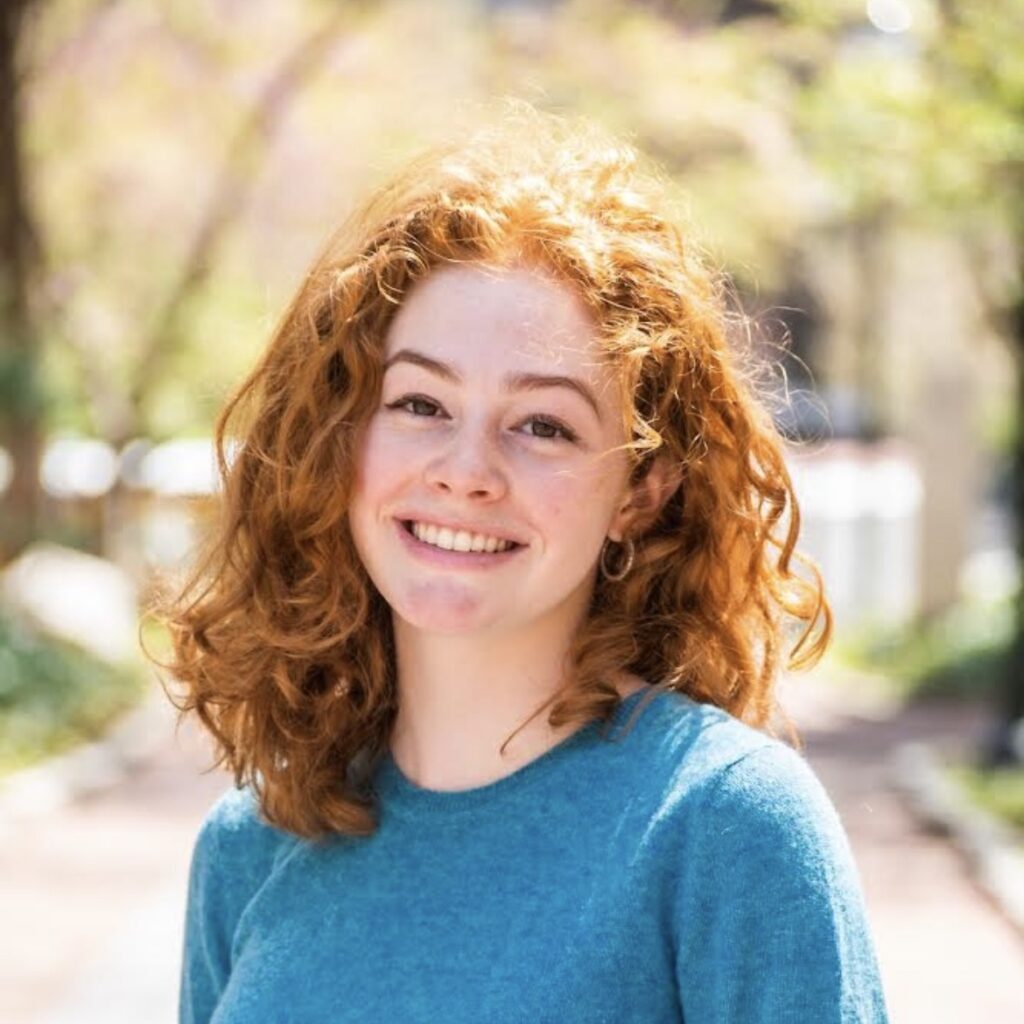
Penn sophomore Jessica Lvov was born and raised in Philadelphia. While she has little connection to CIMS at Penn and has not taken any CIMS courses, her hometown connection to Philly makes her experiences unique from Prof. Schmenner, who has lived in Philly for many years but did not grow up here, and Sage and Chris, who have only lived in Philly for as many years as they have attended Penn.
She begins by mentioning that “almost all of [her] moviegoing experiences have been in Philly, so [she doesn’t] remember the first one, per se” but she decides to talk about watching Frozen with her family as one of her “earlier ones” (“We’ll just use that as an example”) [0:11-0:24]. She continues with, “We would always go to one of the nicer movie theaters, because I live on the very edge of Philly so it’s not as densely populated and there are nicer movie theaters there, so we were on one of those recliners, and it was super cool” [0:27-0:42].
Based on Jess’s language, she seems to have a mix of Type B (“situated memories”) and Type C memories according to Kuhn’s model. Her choice of Frozen as a significant early moviegoing experience implies the presence of “implanted memories” based on the cultural iconicity of the film. As she says herself, “Every child that I know loves Frozen” [0:46-0:50]. Frozen‘s extreme global popularity has cemented it as a nearly-universal moviegoing memory for young people growing up in the 2010s, which could make it stand out disproportionately in Jess’s memory.
Jess’s recollections about which particular theaters she and her family would frequent in Philadelphia follow Kuhn’s framework nearly exactly: name and location of the picture house (“It’s in northeast Philly–it might be a Cinemax or something” [1:05-1:11]), journey (“not as densely populated”), companions (“I was with my mom, and perhaps my little brother” [0:53-0:58]), and interior of the cinema in regard to seating (“recliners”). She also perfectly demonstrates Kuhn’s “repetitive memory discourse” twice: “We would always go to one of the nicer movie theaters” [0:27-0:30] and “We’ll always get a large popcorn and have paper bags and split it among us and finish the entire bag before the movie’s half over” [1:21-1:30]. Using the phrases “We would always” and “We’ll always,” Jess adopts the first person plural and speaks in habitual terms, which are hallmarks of Type C memories.
Jess describes many of her experiences as “fun,” “good,” and “cool.” She also spends more time describing the actual film texts themselves, whether Frozen or “the latest Fast and Furious movie,” than Prof. Schmenner, Sage, or Chris do [1:53-1:55]. Overall, the language Jess uses in regard to her cinemagoing experiences is less specific than the other interview subjects’, but her memories are just as vivid and detailed.
Conclusions
When we first set out to conduct interviews with Philadelphia moviegoers at different parts of the “academia” spectrum, ranging from professional academics to students to non-academics, our assumptions for each group largely correlated the specificity, depth, and breadth of their recollections with their level of academic training.
We hypothesized that full-time academics would have seen more diverse films in diverse venues and would have a greater volume of experiences to draw from overall, that students would notice more conceptual elements of cinemagoing from their classwork but would still have largely the same experiences as their non-CIMS peers, and that non-academics watch movies purely for entertainment and their experiences would reflect that sentiment.
While many of these initial thoughts have been proven to be largely true, we realized that we had not accounted for a few factors: the location in which the subject had spent the most time, the amount of time spent in aforementioned location, and the aforementioned location itself.
It is true that Prof. Will’s breadth and depth of cinemagoing–evident in the many film organizations, festivals, and industry figures he refers to, as well as his “movie a day” practices in college–largely exceeds that of any of the students’, but we did not expect for there to be no theaters at which he could watch movies in Philadelphia in 2009. In spite of all his experience and highly-specific training from Chicago, this fact strongly limited his early cinemagoing experiences in Philly.
It is also true that the CIMS students were able to access cinema ideologies and theories in their anecdotes to add a layer of academic understanding which Jess did not have, but we did not expect Jess’s relationship to Philadelphia to differentiate her recollections from the other students’ as much as it did. While all of the students were able to talk about things like seating, concessions, and which movies they watched, only Jess offered the name of her theater without assistance as well as information about the comparative quality of local theaters and both geographic and demographic specifics of the surrounding region. The classroom learning of the non-native CIMS students could not make up for the 19 years Jess has called Philly “home.”
While scholars and students can gain specialized knowledge about films as texts and the experiences of film exhibition and reception, there is no match for understanding the cinemagoing of a place through simply living in the place. A scholar from another city with an entire life of training would be unmatched in familiarity about Philadelphia moviegoing against a Philly native. Sure, the scholar might know all about Philly’s film festival scene, or other scholars who live and work with Philly, but they would never know the idiosyncrasies of local Philadelphia theaters, like which theater has a reputation for having the best popcorn, or which theater most high schoolers prefer for first dates, like a native would.
